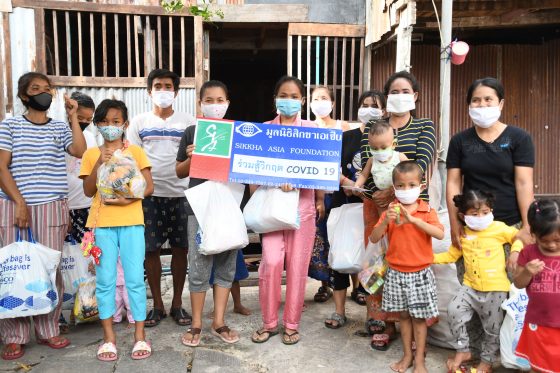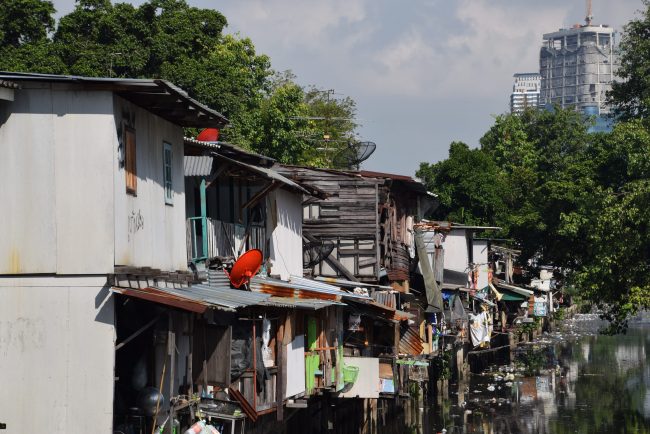





A provisional system led by the military was put in place after the coup d'etat, but a civil government was restored after the December national election, after a period of one year and five months. The possibility of reverting to a situation of political unrest is, however, high, with repulsion between the new government and supporters of the former prime minister and the military. The polarization of wealth continues, with urban slums that have been rapidly increased in number since the 1960s now found not just in Bangkok but in regional cities, as well, and numbering over 4,000.
In 2008, while continuing to evaluate our projects to date, SVA will strengthen links with the communities with a view to the projects becoming independently run by them in the future. We are also working to improve our educational support programs even more, which help children living in areas suffering great hardship.
|
|
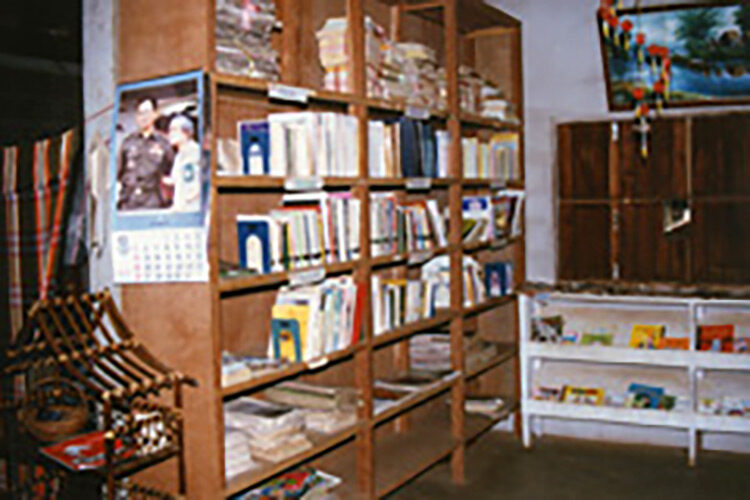
In 2007, there were about 130 thousand beneficiaries of SVA library programs in Bangkok slums and designated regional areas. Within this were 100,709 community library users, 23,640 mobile library activity participants, 202 people who attended daycare training sessions and about ten thousand children who benefited indirectly. SVA also ran seminars and mobile library activities in Tha Song Yang, Tak province, where many members of the Karen hill tribe live. Through direct services offered to children, as well as working with childcare givers, communities became aware of the importance of picture books and story-telling in the physical and mental development of a child. In 2008, we will act on the synergies between our different activities, connecting the dots to expand SVA's work even further.
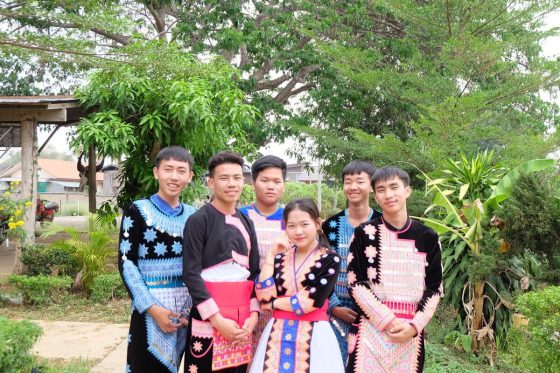
In 2007, SVA provided scholarships to 447 lower and higher secondary school and university students attending schools in Bangkok slums or the former slum areas, Pong, Payao province, Chiang Khan, Loei province, and Muang, Surin province. We prioritize helping those from mountain villages and farming villages in the remote areas, whose school attendance rates according to the government are well below others. SVA has also applied stricter selection standards to ensure the effectiveness of the program, and sponsored a youth leadership skills camp for scholarship recipients in urban slums and northeastern rural areas. We work to develop the next generation through activities at community libraries and community centers during long school holidays, with youth volunteers selected from the pool of scholarship recipients. We will continue in 2008 to improve school attendance rates of children facing hardship.
|
|
In 2007, SVA took 48 children from mountain minorities of Payao province and 30 children from farming villages in Loei province into the dormitories. Because there are few educational facilities above the junior high school level in poverty-stricken areas, the number of children unable to attend school is increasing. SVA's student dormitories take in such children and not only give them the opportunity to study, but also to undertake practical agricultural training and community volunteer work, as guided by staff. Sites are also provided for camps for exchange activities with other groups, as well as for scholarship students. Students form steering committees and learn how to host such events, and not just partake in them. In 2008, we will put more effort into youth development activities, and the student dormitories will be used even more for seminars and interactions.
We hosted about 700 visitors from Japan in 2007. In June, ten Thai scholars and two Thai staff members were invited to Japan. Apart from introducing SVA's work to Japanese people, they enjoyed cultural exchange, including traditional dance performances. Staff members also came for training in July and November and participated in fieldwork on daycare, education and regional development in Japan. The experiences gained by each visitor from these seminars and exchanges are then fed back to other scholars and staff members.
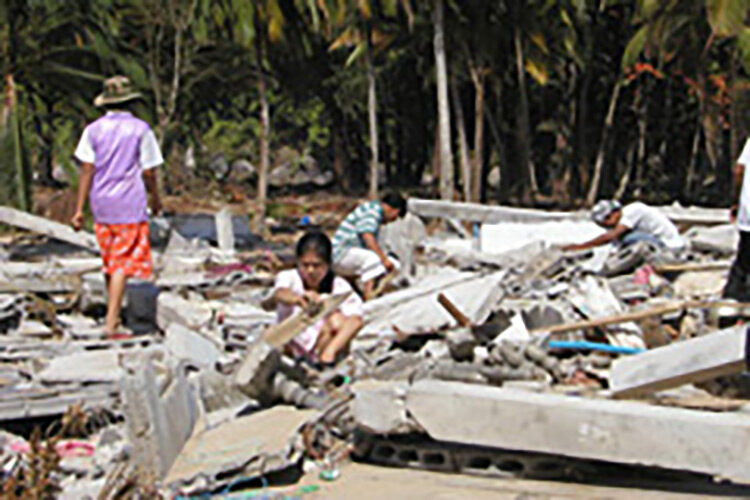
Four years have passed since the disaster and many victims continue to live in shelters, although about half have finally moved into reconstructed housing. In the center of this former slum area, a community center has been built which provides space for a library (which opened in September), a nursery (which opened in August) and meetings. The nursery is attended by 40 children aged between two and a half to six years. The library is used by about 1,600 people per month. We will continue efforts to create spaces that allow the victims to reconnect with each other as a community and recover from their disrupted lives, taking into consideration the conditions of the location and the advantage of our position as a neutral third party.
In the final year of this project, 2007, we welcome the second year since three libraries were opened in the disaster areas. Our fears of the novelty waning have been dispelled and the libraries have well utilized and become part of the communities. 5,207 people participated in mobile library activities and 86 in the daycare training seminars. Although this project has come to an end, we will continue indirect assistance to libraries and regular monitoring in the future.